
I find the process of research for each section that I write fascinating. It isn’t in any way like academic research. Right now I’m working on a section where we ride across Newfoundland, from Lewisporte to St. John’s.
I start by reading all the relevant posts from our Going East blog, including the comments. I read Scott’s journals for the same dates, and I look at our pictures from those dates. Once I have the sense of the section, I start working on individual days (scenes) from that segment.
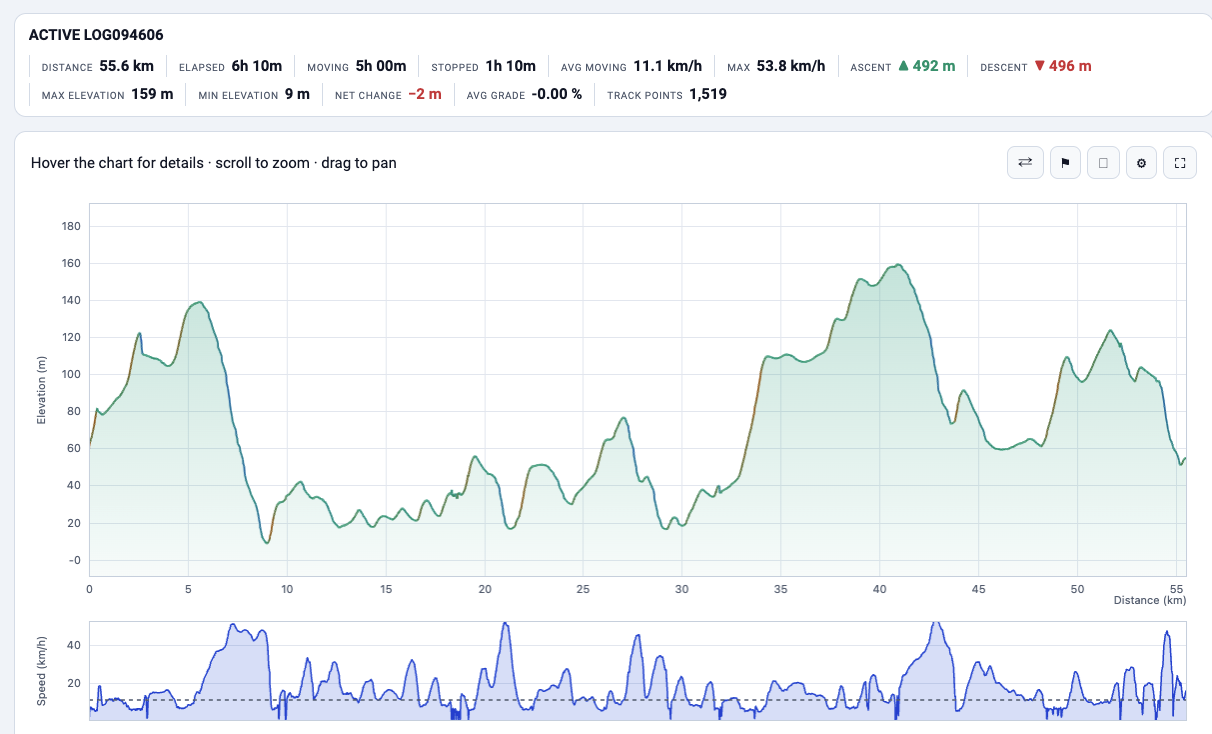
Right now I’m working on August 21, 2008. We rode from Charlottetown to Clarenville, 55km. I have the track file that shows the exact route, which I can also use to see the elevation profile of the ride (GPX Profile), and the time of day for each each part of the ride. The times in this file happen to be in the eastern time zone, rather than Newfoundland time.
I look at the route on a My Maps Google Map. The specific map for August 21st, 2008.
If I need to, I use Google Street View to see what the road currently looks like. This helps me with seeing the background geography, especially for areas where I don’t have photos.
We had digital cameras and a GPS. Since the devices have their clocks synced, this allows him to know where we were when the picture was taken. Scott ran a process that automatically added the location data to each photo before he uploaded it. Today, this is a lot easier, as smartphones can automatically add geolocation data to photos.
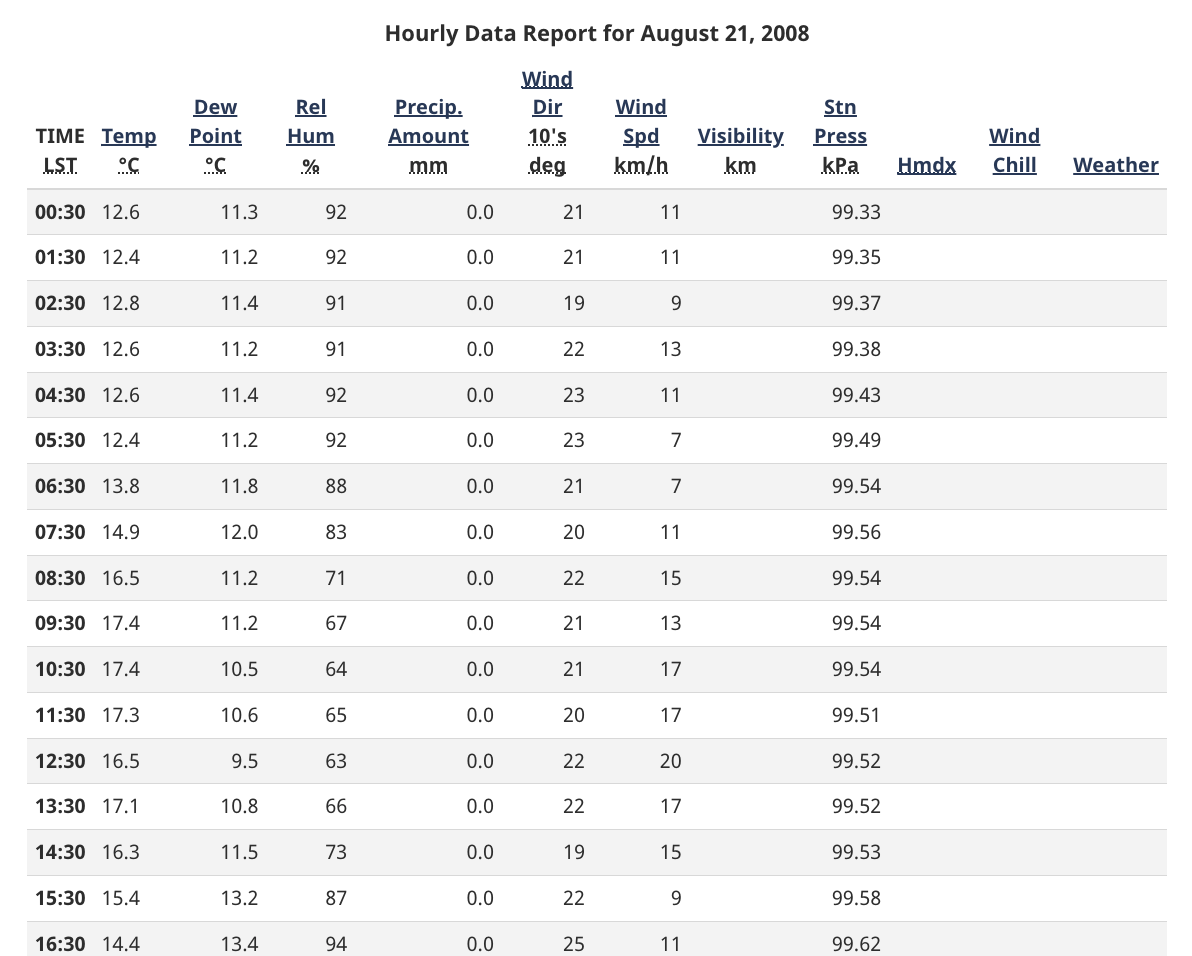
I check the weather for that day on that location using the historical weather data on the Government of Canada website.
If I talk about other people, I see what information I have about them. If they are significant to our story, I see if I still have contact information for them. I reach out to them and ask what they remember of our trip.
In this case, the interaction wasn’t as significant. The blog post did give a hint at the person who we met—a mention that he wrote an article for Canadian Geographic. I used the university library to find the archive of Canadian Geographic, found the specific issue, and search through it for authors from Newfoundland. I believe I found the correct person, but I’m not 100% certain. In this case, the interaction is minor, so I decide to leave his name and any identifying information out of the book. The detail isn’t necessary to the overall story.
In the end, I write a few paragraphs that describe the day. I then look at how I think I was feeling at the time. In my first draft, I said I was happy, because that is how I would feel today. However, when I look at the photo I know that wasn’t what I was feeling. When I look at the blog and Scott’s journal entry, I know that I was frustrated and not happy. I rewrite that part – and end up with this as a draft:
The sun is shining and the temperature is 16 degrees, which would be perfect for riding, except that we have a horrible headwind which saps my limited energy. Add in hills, and this stretch of the highway is a challenge. As I push up the hill, my shoulders braced against my seat back, my glutes start to cramp. My abductors are burning. I keep pushing. If I stop now, I’ll have a harder time getting to the top of the hill.
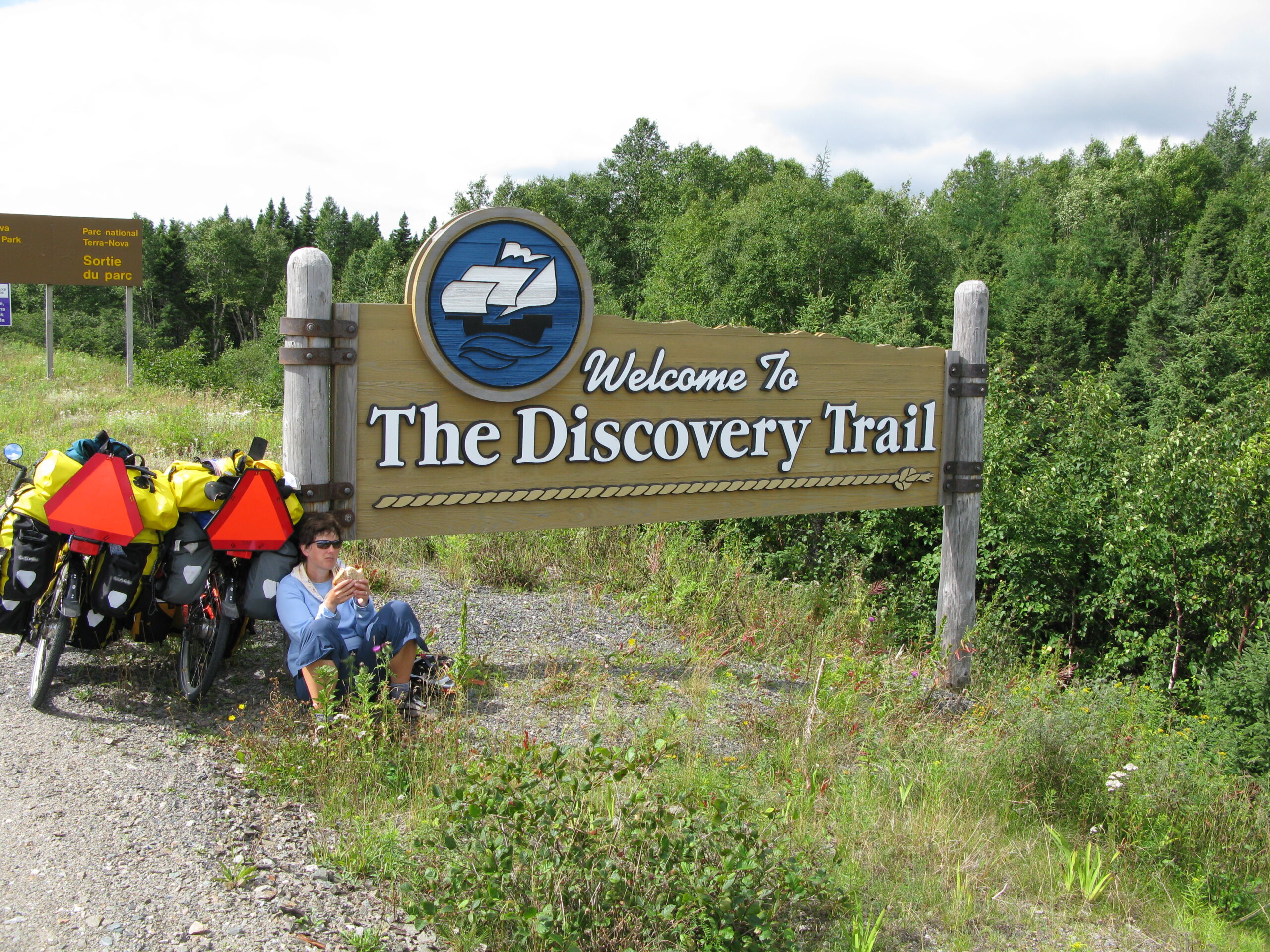
Shortly after entering Terra Nova National Park, we pull over to the side of the road for a late morning snack. I pull out the fresh loaf of whole wheat bread, slide off a couple of pieces, and slather it with chunky peanut butter and homemade bake-apple berry jam. Two of my favourite things from Newfoundland, the fresh bread that is available in almost every convenience store, and homemade local jams. I lean against the large wooden sign welcoming us to the Discovery Trail.The scent of pine needles mixed with the salt air of the ocean fills my nostrils. I take a deep breath. I wish I were happy in this moment, but I’m irritated with my body. Why does it always have to be a struggle?
Back on the bike, we see a cyclist riding in the other direction. Moments later, he approaches us from behind, having crossed the highway to say hello. We exchange the question and answer that has become standard between us and other cycle tourists—where are you from? where are you going? how is the road ahead?
“I’m from St. John’s. I’m headed up to my cottage in New-Wes-Valley,” he tells us.
“I’ve done lots of cycle touring, and I find Newfoundland is one of the most challenging places to ride. The hills are crazy and the weather is constantly changing.” We couldn’t agree more.
This process is repeated for the next day in the story. It is time consuming but also enjoyable work. It helps me relive the life changing adventure, which in turn, I hope, makes me a better writer.
Leave a Reply