

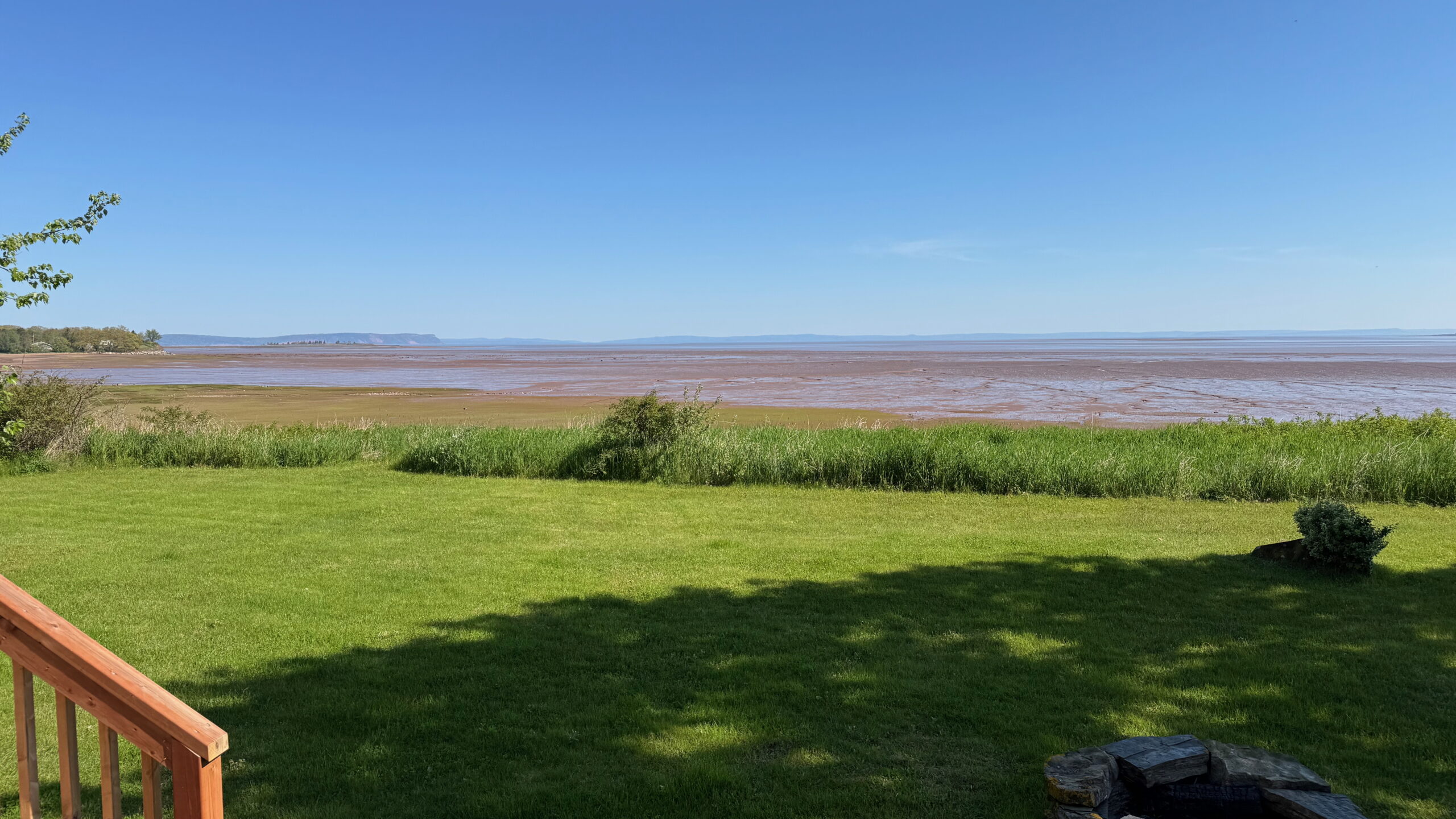
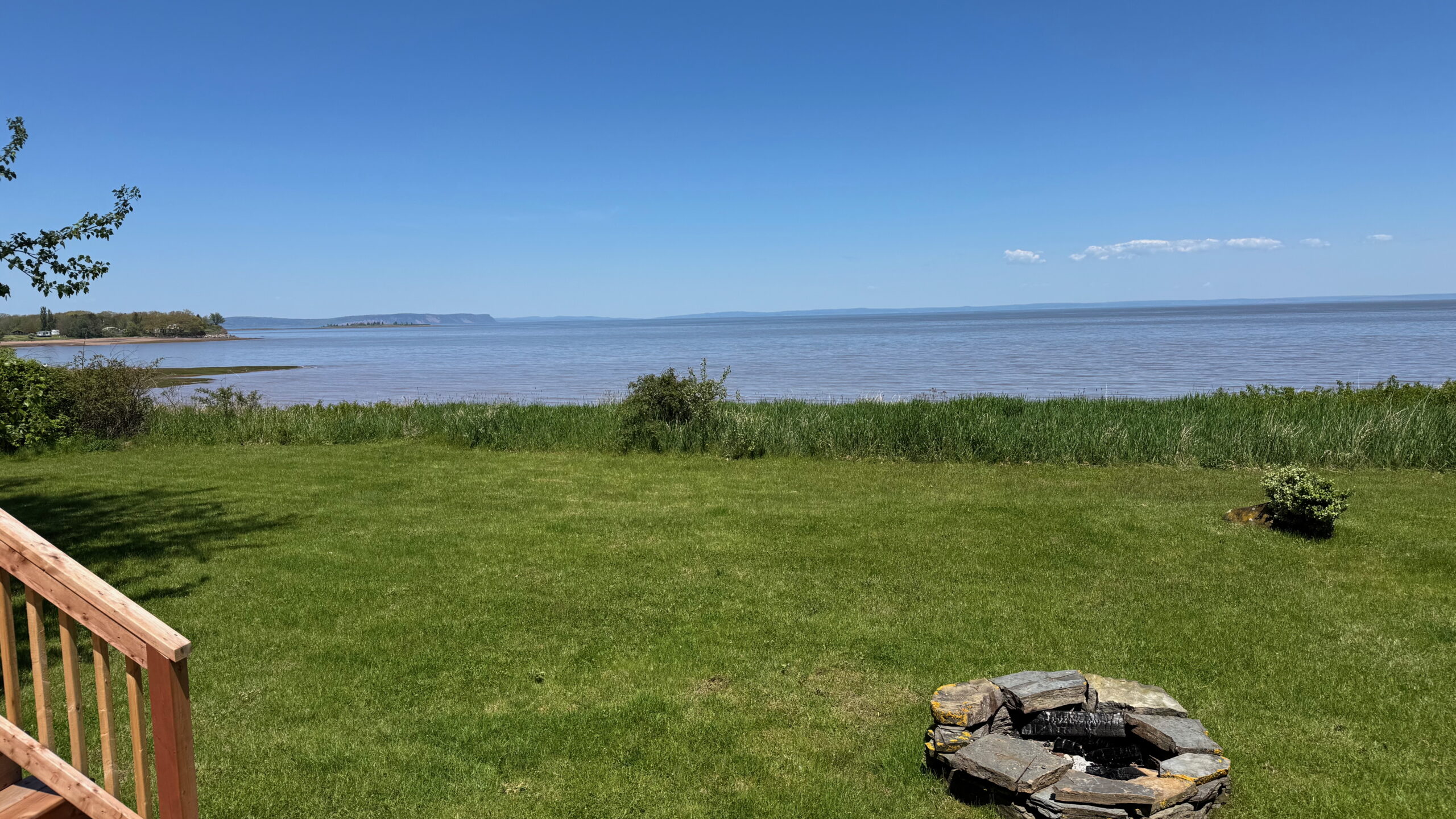
Sitting at an old wooden table on second floor of a cottage with the window open listening to the birds and overlooking the Minas Basin. There is over a mile of ocean bottom naked and exposed to the sun, brown-red mud with cracks, lines that meander towards the ocean. It is low tide, and the water is gone.
I am reminded of my cadet years. Back in the late 1980s, I spent my summers at HMCS Quadra, a cadet camp in Comox BC. The camp is on a small spit of land surrounded by ocean. The parade square, where we congregated multiple times a day, overlooked the jetty and the docks. I remember the kids from Saskatchewan who were seeing the ocean for the first time. Their surprise upon seeing their first low tide, and asking “where did the water go?”. The difference in tide heights was typically between 13 to 16 feet.
I’m brought back to a concert I attended in Lunenburg where Terra Spencer mentioned growing up on the Bay of Fundy – where we have the largest tides in the world. For her, it was normal to see boats sitting on the bottom of the ocean while docked at low tide. The mud soft and not damaging to the boats. The ocean water itself was only swimmable for 2 hours a day, during the slack leading up to high tide. The tides here are between 53 and 73 feet!
Having grown up not far from the ocean, tides were a part of my childhood. We lived in a small town, Kemano BC, and needed to take a boat when we wanted to leave town. Every six months, we would go on an overnight trip to Kitimat to see the dentist. For me, the tides translated to how steep the ramp to get to the dock was. Moving luggage and up or down to the boat was either easy or difficult depending on the tides.
Later, as a teenager, we had a sailboat that was docked at a small marina. Our boat actually leaned over at low tide, as the keel hit the bottom. We had to wait for the tide to be at a certain level before we could leave the marina. Reading the tide charts was a critical requirement as part of our trip planning. Kitimat tides typically range around 21 feet.
After moving to Bridgewater, it took me a year before I discovered that the beaches were not beaches at high tide. Before driving to the coast for a beach walk, I needed to check the tides. If the tide was high, I would need to change plans and go for a forest walk instead. The beaches are incredible on the South Shore of Nova Scotia, but they are only beaches at low tide. This is especially interesting because the tide heights range only 5 to 8 feet, and yet the sand beaches are shallow enough that they appear and disappear with the tides.
I cannot imagine not understanding the tides or seeing them for the first time.
Sitting here, watching the extreme tides over the Minas Basin, I’m reminded of how the rhythm of the tides as been apart of my entire life.
Like my writing? Please subscribe.
Leave a Reply